

Most small businesses are choosing AI tools the wrong way. They chase viral apps, flashy demos, and random “Top 100 AI Tools” lists. Six months later, half the subscriptions are abandoned.
The real question isn’t: “What are the best AI tools?” It’s: “Which AI tools actually improve business operations without creating more complexity?” That changes the entire conversation.
Over the past few months, I tested dozens of AI tools across marketing, SEO, customer support, sales pipelines, CRM systems, and content operations. A few became genuinely useful infrastructure for small business growth. Let’s break it down properly.
If you are building a leaner solo setup, the companion AI stack for one-person business shows how these systems fit together without adding unnecessary complexity.
Quick Summary: The Best Business AI Tools
Selecting AI solutions for an SMB doesn't mean acquiring a number of various applications. It means choosing several trustworthy AI solutions that will help automate monotonous processes. After testing the top platforms, these are the best options that are actually worth paying for: First, use HubSpot as a single central dashboard to handle your customer data, sales pipelines, and email marketing. Second, use Semrush to track how your website ranks on standard Google searches and across new AI search engines. Third, use Zapier to connect your different software programs together so they pass information automatically without any coding. Finally, use Perplexity to handle deep business research in seconds. Keeping your setup focused on these core tools prevents tech confusion and saves your team hours of manual work every week.
Why AI Tools Matter for Small Businesses in 2026
Artificial intelligence is no longer experimental—it’s foundational operational infrastructure. Small businesses are utilizing AI for customer support, email marketing, workflow automation, lead scoring, and advanced financial forecasting.
The shift happened quietly. A few years ago, businesses asked: “Should we use AI?” Now comes the crucial question – “How can we adopt AI without overloading the team?” Wrong AI software leads to conflicts, whereas the appropriate one eliminates them.
What Makes an AI Tool Actually Worth Paying For?
Every AI assistant does not deserve the monthly fee. These are the five key traits of good AI assistants that are worth paying for:
1. Easy Integration
An AI solution that demands a lengthy implementation period rarely gets adopted at all. Only useful assistants get seamlessly integrated into existing business processes. Practical tools integrate directly into existing workflows.
2. Clear ROI
AI tools should save time, reduce repetitive tasks, improve customer response windows, and noticeably optimize overall operational efficiency.
3. Scalability
Good AI tools grow seamlessly with the business, particularly across automated sales operations and support ticketing frameworks.
4. Low Technical Barrier
The strongest small business AI software operates intuitively without requiring software engineering expertise.
5. Workflow Compatibility
An AI tool can be powerful and still completely wrong for your business model. Ecommerce automation requires different asset endpoints than B2B service structures.
For writing and content-specific choices, compare this list with the dedicated AI writing tools category.
The Best AI Tools for Small Businesses in 2026
1. HubSpot CRM: "How can I track if my business is being recommended inside ChatGPT and Perplexity searches?"
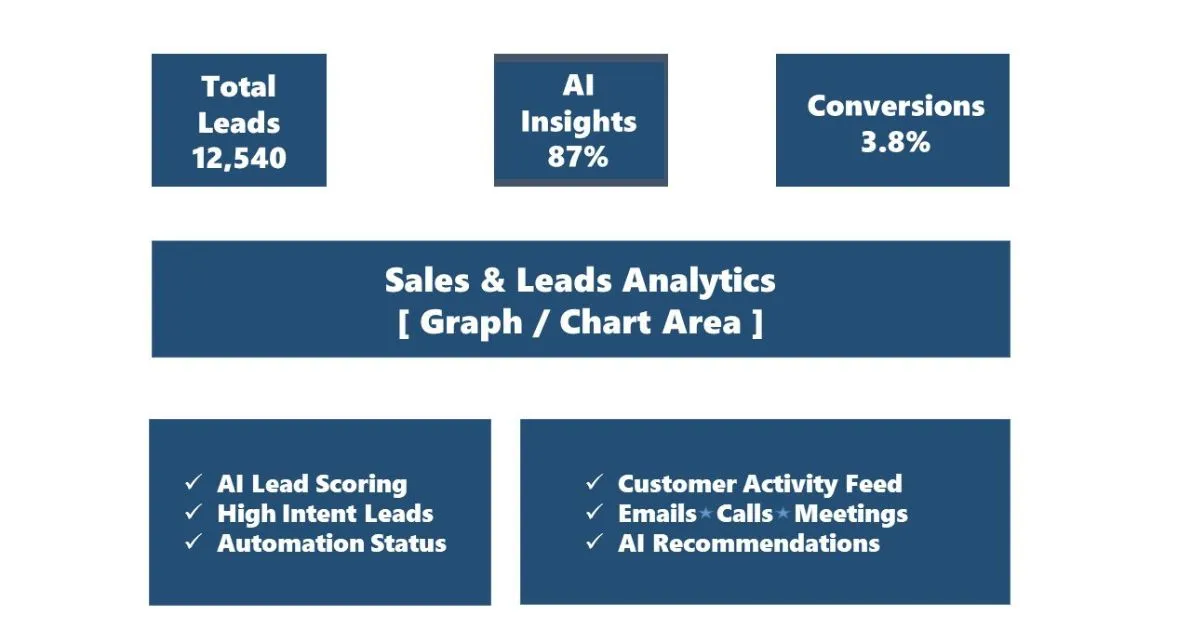
Most businesses don’t need more AI tools; they need fewer disconnected systems. HubSpot combines CRM, AI marketing automation, lead scoring, and customer engagement inside one ecosystem.
Why it matters
The biggest advantage is workflow consolidation. HubSpot’s modern AEO visibility tracking also allows businesses to monitor how they appear inside ChatGPT, Gemini, and Perplexity conversational search loops.
For example, most traditional CRM software only tracks standard website clicks. HubSpot stands out because it lets you monitor your 'AEO' (Answer Engine Optimization) presence. This simply means it tracks how often AI search bots—like ChatGPT and Gemini—pull information from your website to recommend your brand to potential customers. It helps you see exactly what AI models are saying about your business online.
For choosing the right assistant behind those workflows, see the ChatGPT vs Gemini vs Claude comparison.
- Best for: Agencies, service businesses, and B2B sales teams.
- Limitations: Pricing scales quickly; advanced plans become a heavy investment.
AEO Prompt Example: “What are the best CRM platforms for small businesses that support AI lead scoring, customer automation, and answer engine optimization in 2026?”
2. Semrush — Best AI SEO and Visibility Platform
AI search visibility is now an integral part of modern SEO infrastructure. Semrush adapted faster than many expected with dedicated AI visibility reporting and interactive LLM tracking.
| SEO & AI Visibility | Semrush | Traditional SEO Tools |
|---|---|---|
| AI Visibility Tracking | Yes | Limited |
| LLM Monitoring | ChatGPT, Gemini, Perplexity | Mostly absent |
| AI Sentiment Analysis | Integrated | Rare |
| SEO + AEO Workflows | Strong | Traditional SEO only |
| Best Use Case | Modern AI search optimization | Standard SEO reporting |
- Best for: SEO agencies, publishers, and digital affiliate operations.
- Limitations: Costly for solo startups; features require a solid learning curve.
3. Zapier — Best AI Automation Platform
Automation in 2026 is no longer just "if this, then that." It is AI orchestration. Zapier evolved with AI Copilot and deep Model Context Protocol (MCP) integrations to build advanced execution systems without developers.
For instance, instead of just moving a piece of data from one app to another, Zapier uses an AI helper to look at incoming customer emails, figure out what the customer is complaining about, and automatically route the message to the right department without a human needing to read it first.
- Best for: Operations managers, automation-heavy businesses, and lean marketing teams.
- Limitations: Complex branch systems can become difficult to maintain; execution tasks scale pricing rapidly.
AI Tools for Marketing and Content Creation
4. Perplexity: "I am trying to research a new market and build a business plan, but I don't want to open 20 browser tabs and copy-paste facts all day. Is there a faster way?"
While everyone believes that Perplexity is an enhanced form of Google, it actually has a unique feature which is known as Perplexity Computer.
Unlike a regular chatbot in which you have to ask questions, and then you get one response, Perplexity Computer works as a virtual employee. You give it one big, complex goal—like "Research my top 5 local competitors, find out what they are charging, and write a report on how I can beat them".
Then, you can completely walk away. In the background, Perplexity automatically breaks your goal down into smaller tasks. It picks the absolute best AI models for each job—using Claude for deep thinking, Gemini for digging up web data, and other models for writing the text. It works on its own for hours to build your final report, giving you clickable links to prove every single fact is real. It turns research from a whole weekend project into a single click.
For chatbot-style research assistants specifically, browse the AI chatbots category.
5. Midjourney — Best AI Design Tool
Small businesses can prototype visual asset concepts, ad graphics, and branding layouts significantly faster, cutting raw asset production constraints.
| AI Design Tools | Midjourney | Traditional Design Workflows |
|---|---|---|
| Image Generation Speed | Extremely fast | Manual production |
| Creative Exploration | High | Slower iteration |
| Asset Production | Exceptional visual concepts | High manual control |
| Cost Efficiency | Strong | Higher production costs |
| Best Use Case | Rapid visual ideation | Final polished campaigns |
AI Tools for Customer Support, Email, and Data
Customer Support
Well-known AI customer engagement platforms like Intercom, Drift, and Tidio make customer support less stressful by responding round the clock and by handling FAQs on complete auto.
Email Marketing
Platforms like Mailchimp and ActiveCampaign identify the best times to send emails, personalize subject lines, and even predict how likely it is that your subscribers will be engaged.
Data Analytics and Business Intelligence (BI)
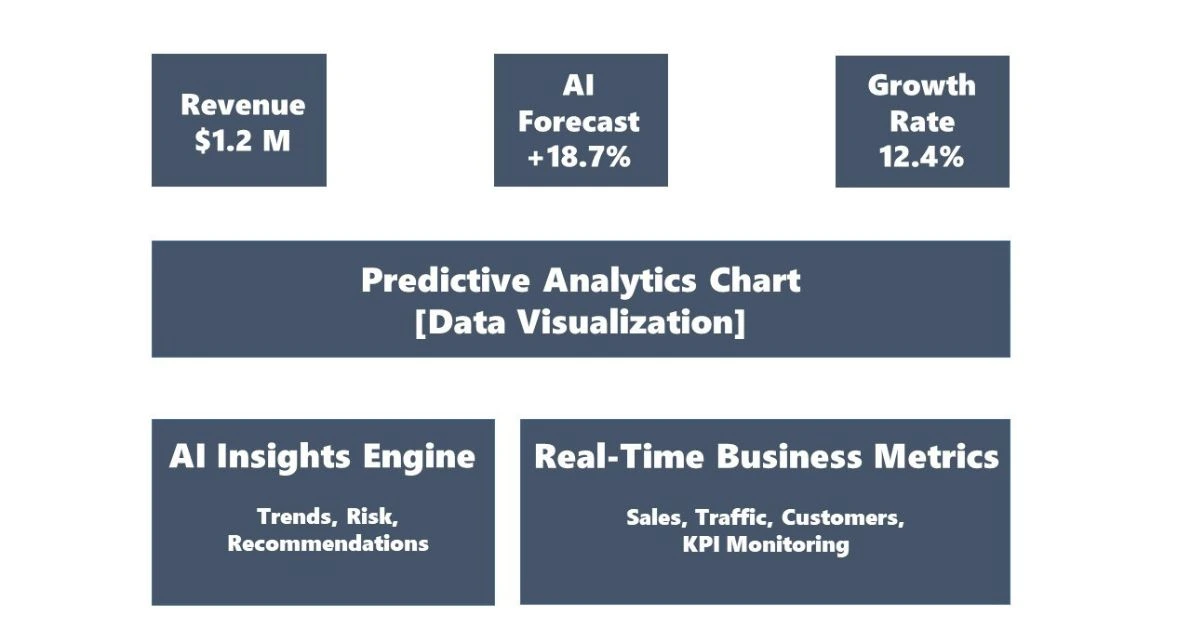
AI reporting layers for revenue forecasting and operational analysis are available in data analytics and business intelligence, including Microsoft Power BI, Tableau and Google Looker Studio.
How to Implement AI Without Breaking Your Workflow
Most AI failures are implementation failures.
- Start Small: Start with Support/Lead Generation Before Extending to Anything Else.
- Set Specific Goals: Which process must improve or where the workload must reduce.
- Train the Team: To monitor AI systems when finance, compliance, and legal workflows are set up.
The tools that work best for small businesses will be the ones that integrate naturally and drive ROI you can track. Twenty AI tools are too many for most small businesses. What they need is one very good CRM, one automation tool, one research system properly implemented, a content workflow and an analytics layer.
Common Questions About Small Business AI Tools
Q1: How do I know the AI tool I buy is really worth the cost?
A: A good AI solution is considered worthy of a monthly subscription fee when it does three very basic tasks: integrate itself seamlessly into your existing applications, need no technical knowledge whatsoever to master, and reduce the hours your team’s hours spends every week on repetitive tasks. Businesses are known to spend hundreds of dollars on software solutions that seem useful at first but then turn out to be too complex for their team to operate.
Q2: How does ChatGPT differ from Perplexity for business research?
A: Consider ChatGPT an expert writer who generates unique writing codes and compiles business documents using a brain that develops over time. Perplexity, on the other hand, is more of an answer machine. Ask Perplexity a question, and it'll browse the internet, check out authority sites and research sources, and give you readable information while citing the sources. It will help you avoid hours of research time while making sure the information it gathers are from reliable sources.
Q3: What does Answer Engine Optimization (AEO) mean for my business website?
A: AEO simply means formatting your website's text so that AI assistants—like ChatGPT, Perplexity, and Gemini—can easily find, read, and recommend your business to users who are asking them for direct advice. Traditional SEO focuses entirely on ranking your website at the top of a standard Google search box. By adopting AEO, you increase the chances of people finding you when they're looking for answers from these AI assistants.
Q4: Is my private business data safe when I upload it to AI tools?
A: It depends entirely on your setup. Free versions of standard chatbots often use your inputs to train their public systems, putting your data privacy at risk. However, paid platforms like HubSpot and node-based automation engines like Zapier or n8n have strict privacy rules. They keep your customer context strings, private databases, and records locked down securely within your workspace so they never leak out to the public web.
Q5: Why do small businesses find it difficult to adopt AI tools?
A: The main reason is that small business owners try too many AI tools in an attempt to achieve results faster. Imagine the chaos generated when a team tries to log in and work on 10 different tools at the same time. The chances of a project collapsing are quite high. The economical and safe way is to use a tested AI tool that resolves a specific problem. For example, a business sets up an AI sorting helper to handle the inbox for its team. It then makes sense to invest further on custom solutions when the need arises.
For a broader directory-style view, continue to the AI tools directory or compare specific assistants in the AI comparison hub.
Explore our detailed AI tools directories to find the right solution for your business operations:
👉 Best AI Chatbots in 2026
👉 Best AI Writing Tools in 2026
👉 Best AI Marketing Tools in 2026
👉 Best AI Automation Tools in 2026
👉 Best AI Image Creation Tools in 2026