

Most people are choosing the wrong AI. Not because the tools are crap but because they firmly believe one model will dominate everything. Well, that is not what happened in 2026.
A pattern began to emerge after performing real workflows over 30 days with OpenAI ChatGPT, Google Gemini and Anthropic Claude.
The results shocked me. Not because one model was dramatically smarter, but because each AI model optimized for completely different production tracks. Let’s break it down properly—no benchmark obsession, no artificial “winner,” just real-world analysis.
Quick Summary: Which AI Tool Is Best for You?
There isn’t just one artificial intelligence tool in 2026 that resolves all problems, as each of these tools were built to excel in performing specific tasks. After 30 days of real-world testing on ChatGPT, Claude, and Gemini, here are the results to help you choose the right AI tool for your business. Go in for ChatGPT, if you need a writing assistant that adapts to your tone in a very short period of time, helps build website mockups, and conducts fast and comprehensive research on different topics. Choose Gemini if you use Google Docs or Gmail daily and need an AI assistant to compile lengthy texts and website content in real time. Choose Anthropic Claude if you need an expert assistant to handle heavy computer coding, read massive 1,000-page documents, and write highly structured business reports. Using a mix of these specialized tools based on your daily tasks will save you hours of manual work.
Introduction to AI Language Models
Modern AI language models are no longer simple chatbots. They have evolved into full platform architectures capable of technical coding, image generation, long-form content writing, workflow automation, and enterprise agent orchestration.
The comparison between ChatGPT, Gemini, and Claude is no longer about answering trivia faster. It is about workflow alignment. The best AI for SEO may not make the best assistant for software engineering; and the most powerful research agent may not create the best long-form content.
For focused two-tool breakdowns, start with the AI tool comparison hub and then narrow into the specific matchup that fits your workflow.
The Evolution of Conversational AI
The first conversational AI systems operated based on scripted logic. Modern generative AI refers decades of widely disillusion from itself and has been often associated with bursting transformer architectures, multi-modal reasoning and large context fingers.
Instead of sitting inside a very simple chat interface, you could have an advanced AI assistant. It can control local desktop files, execute multi-step scripts, connect to secure databases via unified protocols, and function as a proactive background agent.
Core Technical Foundations
ChatGPT: I need a fast helper that can write marketing copy in my exact brand voice and deeply research a market. Should I use OpenAI?
OpenAI built the ChatGPT ecosystem around system-level flexibility and autonomous control. Running on its frontier GPT-5.5 platform layer, recent upgrades focus heavily on advanced tool execution.
- Ecosystem Features: Unlocks autonomous local Agent Mode and secure machine integration via its Codex desktop app layer.
- Core Strengths: Fast local file changes, rapid code scaffolding, multi-app automation loops, and long-horizon Deep Research synthesis.
- Limitations: High-volume token processing requires strict parameter monitoring; entry plans include inline ads.
ChatGPT remains the absolute benchmark for general workflow versatility and cross-app connectivity.
For the standalone platform feature and pricing breakdown, see the full ChatGPT AI chatbot review.
Gemini: I am drowning in Google Sheets and email threads every day. Which AI will connect directly to my workspace to speed things up?
Google DeepMind approached AI as a connected informational utility. Driven by the blazing-fast Gemini 3.5 Flash engine, it operates as a low-latency research engine.
- Ecosystem Features: Built natively into the Google Workspace stack (Docs, Gmail, Sheets) utilizing the fluid Neural Expressive UI layout.
- Core Strengths: Real-time web retrieval, instant search-grounded briefs, massive data sheet parsing, and 24/7 background assistance via Gemini Spark.
- Limitations: Informational writing can occasionally lean safe or neutral; less customizable outside Google environments.
For teams heavily embedded within Google Cloud or research-heavy workflows, Gemini is incredibly efficient.
For a deeper look at its Workspace strengths, read the full Google Gemini review.
Claude: I am trying to build an app or read through a massive 500-page manual. Which tool handles heavy technical work without getting confused?
Anthropic optimized Claude around logical processing and technical depth. Powered by the state-of-the-art Claude 4.7 generation and the flagship Opus 4.7 model, it focuses on dense complexity.
- Ecosystem Features: Features a native 1-Million-token context canvas and terminal-native execution via the Claude Code CLI tool.
- Core Strengths: Internal adaptive reasoning, multi-file codebase refactoring, strict structural document tracking, and Model Context Protocol (MCP) data syncs.
- Limitations: Deep thinking modes add slight processing latency; completely lacks a built-in multi-modal image generator.
Claude feels less like a chat box gimmick and more like a dedicated technical co-engineer.
For long-context testing and pricing details, see the full Claude AI review.
Comparative Overview
| Feature | ChatGPT (OpenAI) | Gemini (Google) | Claude (Anthropic) |
|---|---|---|---|
| Core Strength | Local System Agency | Research Velocity & Sync | Deep Adaptive Reasoning |
| Flagship Engine | GPT-5.5 Layer | Gemini 3.5 Flash | Claude 4.7 Series (Opus) |
| Automation Tool | Codex Desktop Apps | Gemini Spark Background Agents | Terminal-Native Claude Code CLI |
| Context Capacity | Deep Research Threads | Real-time Vector Ingest | 1,000,000 Tokens (Standard) |
| Writing Style | Adaptive & Conversational | Factual & Informational | Structured & Coherent |
The Quick Breakdown for Writers and Creators
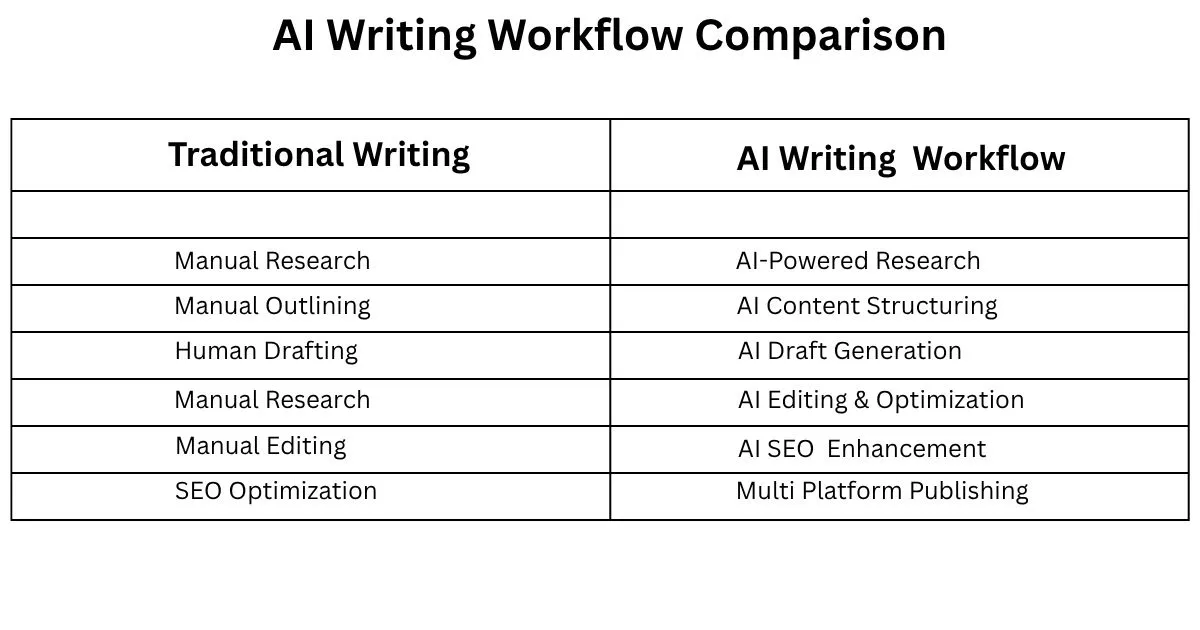
- ChatGPT ChatGPT is an intelligent chameleon in a way. ChatGPT is incredibly versatile at adjusting its writing style based on your company tone and is excellent at writing engaging emails, social media messages, and quick website content.
- Claude is like a professional book editor. It writes incredibly smooth, long paragraphs and is perfect for building deep, structured reports that read like a human wrote them.
- Gemini is the ultimate quick search tool. In mere seconds, Gemini will sift through the entire Internet and give you a concise outline of any topic you want, but you might have to paraphrase some parts of it to sound more original.
One AI Completely Dominates for Heavy Coding
This is where the tools split up completely. If you are building software or managing website code, the differences are huge:
- Claude is the king of serious engineering. It is equipped with huge memory capacity, which enables it to store even an extensive manual containing thousands of pages without missing any information. It can review your whole website's codebase, detect defects, test, and automatically resolve them in quick time.
- ChatGPT is one of the most suitable options for designing high-quality prototypes. For instance, if you need to design a simple button for your website or a short automation script for integrating different applications, it will provide you with the code right away.
- Gemini provides deep utility for Google Cloud integrations, architecture search, and technical document retrieval, but functions less aggressively during rapid file-editing sessions.
| Coding Workflow | ChatGPT | Gemini | Claude |
|---|---|---|---|
| Rapid Prototyping | Excellent | Good | Very Good |
| Code Review | Strong | Moderate | Excellent |
| Large Codebases | Can drift | Good retrieval | Best 1M continuity |
| Tool Interaction | Codex Desktop Apps | Sandbox API Tiers | Terminal Claude Code CLI |
| Overall Fit | Builders & Automation leads | Cloud & Android dev loops | Core Engineering teams |
Content Creation and SEO
The best AI tool for search visibility is not necessarily the smartest model overall—it comes down to deployment:
- ChatGPT remains the strongest engine for high-volume, scalable content production and programmatic formatting.
- Claude excels at deep quality refinement, editing passes, and building structural authority blocks.
- Gemini accelerates initial trend discovery, real-time research synthesis, and accurate target compilation.
Most elite digital marketers now use a multi-model approach to build comprehensive content pipelines.
If content production is your main decision point, compare these platforms against the broader AI writing tools rankings.
Common Questions About ChatGPT, Gemini, and Claude
Q1: Do I opt for one premium AI subscription, or do I consider a mix of all three?
A: Choose one that resolves your immediate big task. For heavy coding or editing long documents, go with Claude. For general business writing and deep web research, pick ChatGPT. However, since each AI tool behaves completely differently, many business owners use the free versions of all three side-by-side. This lets you pass a tricky task to another model if your main assistant gets stuck or starts repeating itself.
Q2. Why do the answers for the same prompt change at times when you use ChatGPT?
A: Consider AI to be an intelligent human creative writer and not a math calculator that gives you fixed answers. It works on probability and outputs answers based on patterns that are inbuilt into the system. It does not refer to a static file and then paste answers. It has a brain that resets when you open a new chat window. Chances are you will find an answer that you like. Save it. The next click is likely to generate a totally different answer.
Q3: What is a "context window" and why does Claude's memory matter so much?
A: A context window is simply an AI’s short-term memory during a single chat conversation. If a tool has a small context window, it will quickly forget what you said at the beginning of your chat once the conversation gets too long. Claude is built with a huge 1-million-token memory. What this means is Claude can retain an entire book containing a 1000 pages or the codebase of a complete website in its memory and reproduce content when needed with high accuracy.
Q4: Can Google go through my emails or Google docs if I use Gemini?
A: If you are using the standard free version of public chatbots, tech companies sometimes review conversations to train and improve their models. However, if you use Google Gemini through a paid Google Workspace business account, your data is completely protected. Sensitive data is encrypted, so the general public can't access your corporate emails, spreadsheets, and documents. AI does not have a database for this kind of data, so your data does not leak over the internet.
Q5: Do these AI chatbots routinely gather live information from the internet?
A: Yes, but they do it in different ways. Google Gemini is built directly on top of Google’s search index, making it incredibly fast at pulling live, real-time web facts into your chat. ChatGPT also has a deep research mode that browses the web when asked. Claude, on the other hand, focuses more on deep thinking and processing the documents you upload, though it can pull web data when needed to help you solve complex problems.
So Which AI Is Actually Best in 2026?
The market has split into specialized operating systems for modern work:
- Choose ChatGPT if you need local system control, autonomous multi-step agents, rapid coding prototyping, and highly flexible writing tone shifts.
- Choose Gemini if you need instant real-time search velocity, seamless Google Workspace product sync, and 24/7 background agent assistance (Gemini Spark).
- Choose Claude if you need deep codebase engineering, 1-million-token technical document analysis, and exceptional structured text quality.
For operational implementation, continue with the AI stack for one-person business or the best AI tools for small businesses.
Explore our detailed AI tools directories to find the right solution for your business operations:
👉 Best AI Chatbots in 2026
👉 Best AI Writing Tools in 2026
👉 Best AI Marketing Tools in 2026
👉 Best AI Automation Tools in 2026
👉 Best AI Image Creation Tools in 2026